
Anúncios
The concept of a secret letter has captivated human imagination for centuries, serving as a powerful tool for communication, mystery, and intrigue throughout history.
The Timeless Art of Secret Letters
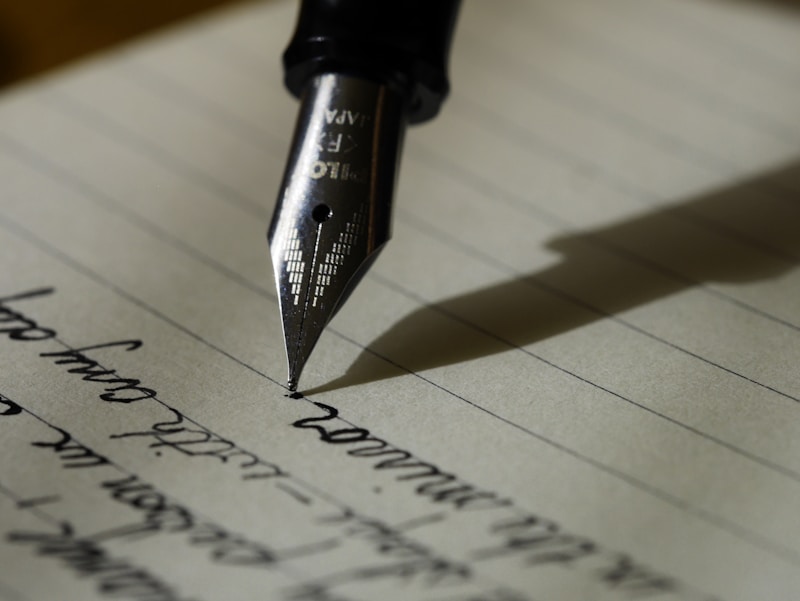
Explore Secret Writing
From ancient civilizations to modern-day espionage, secret letters have played a crucial role in shaping world events, protecting sensitive information, and maintaining privacy. These hidden messages have been used by lovers, spies, revolutionaries, and leaders alike, each finding unique ways to conceal their words from prying eyes.
Anúncios
The art of writing and decoding secret letters combines creativity, intelligence, and necessity. Whether using invisible ink, complex ciphers, or clever disguises, the methods employed throughout history reveal humanity’s endless ingenuity in protecting valuable information. Today, this ancient practice continues to fascinate us, inspiring countless stories, films, and real-world applications in digital security.
📜 Historical Significance of Secret Letters
Secret letters have existed since the earliest days of written communication. Ancient civilizations understood the power of hidden messages and developed sophisticated methods to protect their secrets. The Spartans used a device called a scytale, a cylinder around which they wrapped a strip of leather or parchment. When unwrapped, the message appeared as random letters, but when wrapped around a cylinder of the same diameter, it revealed the true message.
Anúncios
Julius Caesar famously employed what is now known as the Caesar cipher, shifting each letter in the alphabet by a fixed number of positions. This simple yet effective technique protected military communications and became one of the foundational principles of cryptography. His secret letters allowed Roman generals to coordinate strategies without fear of enemy interception.
During the Renaissance, secret letters became instruments of political intrigue and diplomacy. Mary, Queen of Scots, used coded messages to communicate with her supporters while imprisoned. Unfortunately for her, these secret letters were intercepted and deciphered by Elizabeth I’s codebreakers, ultimately leading to her execution. This historical event demonstrated both the power and vulnerability of secret communication.
✍️ Classic Methods of Creating Secret Letters
The techniques used to create secret letters throughout history are remarkably diverse and creative. Invisible ink represents one of the most romantic and widely recognized methods. Simple household items like lemon juice, milk, or vinegar could be used to write messages that became visible only when heated. During wartime, more sophisticated chemical formulas were developed to create inks that required specific reagents to reveal.
Steganography, the art of hiding messages within other messages, offered another powerful approach. Writers would use the first letter of each sentence to spell out a hidden word, or write between the lines of an innocent-looking letter. Some even used tiny pinpricks above specific letters in a printed text to indicate which characters formed the secret message.
Book codes provided an elegant solution for secret correspondence. Two parties would agree upon a specific edition of a book, then use number sequences to indicate page, line, and word positions. Without access to the exact same book, the message remained completely incomprehensible to interceptors. This method was particularly popular among spies during the American Revolution and Cold War era.
🔐 The Psychology Behind Secret Letters
The allure of secret letters extends beyond mere practicality into the realm of human psychology. There’s something inherently thrilling about possessing hidden knowledge or communicating in ways others cannot understand. This psychological dimension explains why secret letters appear so frequently in literature, film, and popular culture.
For lovers separated by distance or circumstance, secret letters provided a way to express forbidden emotions without risking discovery. The Victorian era, with its strict social codes, saw a flourishing of coded love letters. Couples developed personal codes and symbols that allowed them to communicate feelings that society deemed inappropriate for open expression.
The act of writing a secret letter also creates a special bond between sender and receiver. Sharing a code or encryption method establishes trust and intimacy. The recipient knows that the sender went to considerable effort to ensure their communication remained private, which adds emotional weight to the message itself.
🕵️ Secret Letters in Espionage and Warfare
Military and intelligence operations have relied heavily on secret letters throughout history. During World War II, both Allied and Axis powers employed thousands of codebreakers working to decrypt enemy communications. The famous Enigma machine used by Nazi Germany created extraordinarily complex encrypted messages that British codebreakers at Bletchley Park, including Alan Turing, worked tirelessly to decode.
Spies operating in enemy territory needed reliable methods to send information home without revealing their identities or missions. Dead drops, where secret letters were hidden in predetermined locations, became standard tradecraft. Messages written on cigarette papers could be easily swallowed if capture seemed imminent, destroying the evidence.
Microdots represented a technological advancement in secret letter writing during the Cold War. Entire pages of text could be photographically reduced to the size of a period, then hidden within an innocuous letter. Only under magnification would the true message become visible. This technique allowed vast amounts of information to be transmitted in plain sight.
💡 Modern Applications of Secret Letter Techniques
While technology has transformed communication, the fundamental principles behind secret letters remain relevant today. Digital encryption is essentially a modern version of classical ciphers, using mathematical algorithms instead of manual substitution. Every time you send an encrypted email or message, you’re continuing a tradition that dates back thousands of years.
Blockchain technology and cryptocurrency transactions rely on cryptographic principles directly descended from historical secret letter methods. The public and private key system mirrors the concept of sender and receiver sharing a specific code that others cannot access. These technologies protect billions of dollars in transactions daily using concepts that Julius Caesar would recognize.
Even in our age of instant digital communication, some people still create physical secret letters for entertainment, education, or artistic purposes. Escape rooms frequently incorporate coded messages and hidden letters as puzzles. Teachers use secret letter activities to engage students in learning about history, mathematics, and critical thinking.
🎨 Creative Ways to Write Your Own Secret Letter
Creating a secret letter can be a fun and rewarding experience, whether for practical purposes or pure enjoyment. Start with simple substitution ciphers, where each letter of the alphabet is replaced with another letter, number, or symbol. Create a key that both you and your intended recipient can reference to encode and decode messages.
Experiment with invisible ink using common household items. Lemon juice works wonderfully—simply dip a cotton swab or clean paintbrush into the juice and write your message on white paper. Once dry, the writing becomes invisible. To reveal the message, carefully hold the paper near a heat source like a light bulb or iron until the writing appears in brown.
Try incorporating visual elements into your secret letters. Use acrostics where the first letter of each line spells out your hidden message. Create elaborate drawings or doodles where specific elements contain encoded information. The combination of artistic expression and hidden meaning adds layers of interest to your communication.
📖 Famous Secret Letters in Literature and Culture
Secret letters have inspired countless works of fiction and continue to captivate audiences worldwide. Edgar Allan Poe’s “The Gold-Bug” features a treasure map encoded with a substitution cipher, introducing many readers to the excitement of cryptography. Arthur Conan Doyle’s Sherlock Holmes stories frequently involve coded messages that the detective must decipher to solve mysteries.
J.K. Rowling’s Harry Potter series features several memorable secret letters, from the initial Hogwarts acceptance letter that finds Harry despite his aunt and uncle’s attempts to hide it, to the Marauder’s Map that reveals itself only to those who know the proper phrase. These fictional examples demonstrate the enduring appeal of hidden messages across generations.
Popular films have used secret letters as central plot devices. “National Treasure” revolves around hidden messages on historical documents, while “The Imitation Game” dramatizes the real-life story of breaking the Enigma code. These cultural touchstones keep the concept of secret letters alive in public consciousness and inspire new generations to explore cryptography.
🔍 Decoding and Breaking Secret Letters
Understanding how to break codes is as fascinating as learning to create them. Frequency analysis represents one of the oldest and most effective methods for cracking substitution ciphers. In English, certain letters appear more frequently than others—’E’ is the most common, followed by ‘T’, ‘A’, ‘O’, and ‘I’. By analyzing which symbols appear most often in an encrypted message, codebreakers can make educated guesses about letter substitutions.
Pattern recognition helps identify common words and phrases. Short words like “the,” “and,” or “that” have distinctive patterns that become recognizable even when encrypted. Double letters provide clues, as do common endings like “-ing” or “-tion.” Experienced codebreakers develop an intuition for these patterns that allows them to work surprisingly quickly.
Modern computational methods can crack many classical ciphers in seconds, but this doesn’t diminish the intellectual challenge of manual codebreaking. Many enthusiasts still enjoy the puzzle-solving aspect of decrypting messages by hand, finding satisfaction in the mental exercise and the connection to historical codebreakers who had no computers to assist them.
🌟 The Educational Value of Secret Letters
Teaching children about secret letters offers numerous educational benefits beyond simple entertainment. Cryptography naturally incorporates mathematics, particularly number theory and probability. Students learn about patterns, sequences, and logical reasoning while engaging with material that feels like play rather than traditional schoolwork.
Historical lessons become more engaging when connected to secret letters and codes. Learning about World War II takes on new dimensions when students understand how codebreaking shortened the war and saved countless lives. The story of the Enigma machine and Bletchley Park combines history, mathematics, technology, and human drama in ways that resonate with learners of all ages.
Secret letters also develop language skills and attention to detail. Creating coherent encrypted messages requires careful planning and precise execution. Decoding messages demands patience, persistence, and analytical thinking. These skills transfer to academic work, problem-solving, and critical thinking in numerous contexts.
🚀 The Future of Secret Communication
As we move further into the digital age, the methods of creating secret letters continue to evolve. Quantum cryptography promises theoretically unbreakable encryption based on the principles of quantum mechanics. Unlike classical encryption that could theoretically be broken with sufficient computing power, quantum encryption would reveal any attempt to intercept the message, making truly secure communication possible.
Artificial intelligence and machine learning are creating new challenges and opportunities in cryptography. AI can potentially crack codes that would take humans lifetimes to solve, but it can also generate increasingly sophisticated encryption methods. This technological arms race mirrors the historical cat-and-mouse game between codemakers and codebreakers.
Despite these technological advances, the fundamental human need for private communication remains unchanged. Whether carved on ancient stone, written in invisible ink, or encrypted with quantum algorithms, secret letters continue to serve essential purposes in human society. They protect our privacy, secure our transactions, safeguard our secrets, and sometimes simply add a touch of mystery and romance to our communications.

💭 Why Secret Letters Still Matter Today
In an era of mass surveillance and data breaches, understanding the principles behind secret letters has never been more relevant. Every individual deserves the right to private communication, whether for personal, professional, or political reasons. The techniques developed over centuries of secret letter writing form the foundation of modern privacy protections.
Secret letters remind us that some things should remain private, that not all information needs to be public, and that protecting our personal communications is both a right and a responsibility. They represent human ingenuity in the face of adversity, creativity under constraint, and the enduring value of privacy in an increasingly transparent world.
The enduring fascination with secret letters speaks to something deep in human nature—our love of mystery, our appreciation for cleverness, and our recognition that words carry power. Whether you’re encrypting sensitive business data, writing a playful message to a friend, or simply appreciating the historical significance of coded communication, secret letters connect us to a rich tradition of human creativity and resilience that spans millennia and continues to shape our world today. ✨
